English

Sep 10, 2026
An extruder screen changer should be sized around actual melt throughput, polymer viscosity, required filtration level, contamination loading, allowable pressure drop, and the way screens will be changed during production. Selecting the unit only by extruder screw diameter or connecting bore can leave too little effective filtration area, causing rapid pressure rise, shorter screen life, unstable output, and unnecessary production interruptions.
For stable extrusion, the screen changer must still provide acceptable melt flow when the screen pack has accumulated contamination, not only when a new and clean screen is installed.
The first sizing number processors usually provide is extrusion capacity in kilograms per hour. It is important, but it cannot be used alone.
A 300 kg/h line processing clean virgin polyethylene through relatively coarse filtration places very different demands on the filtration system from a 300 kg/h recycling line processing contaminated regrind through fine screens.
A correctly selected extrusion screen changer therefore needs to be evaluated using several operating inputs together.
| Sizing Input | Why It Affects Screen Changer Selection |
|---|---|
| Normal and maximum output | Determines required melt-flow capacity |
| Polymer and melt viscosity | Higher-viscosity melt generally creates more resistance |
| Melt temperature | Influences viscosity and pressure drop |
| Screen pack specification | Finer filtration can increase resistance |
| Recycled content or contamination | Determines how quickly filters load |
| Allowable operating pressure | Limits usable pressure rise |
| Required run time | Influences necessary filtration area |
| Change method | Determines whether output can remain uninterrupted |
The objective is not to select the smallest unit that can physically pass the nominal output. Some reserve filtration capacity is valuable when pressure stability and long production runs are important.
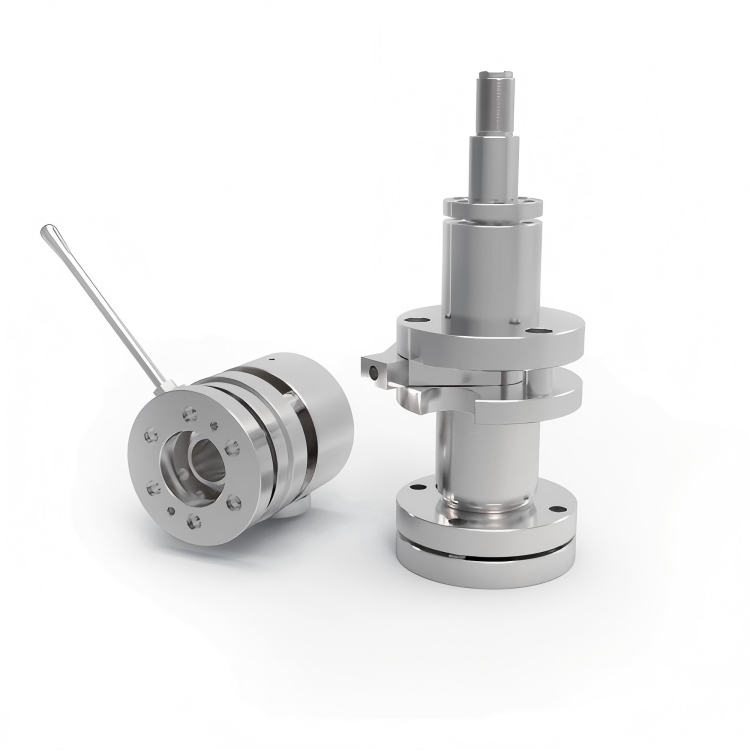
The same melt output passing through a larger effective screen area creates a lower flow loading per unit of filter area. This can reduce initial restriction and usually gives contaminants more usable area to accumulate before pressure reaches the screen-change limit.
A small filtration area may appear adequate when a clean screen is installed. As the screen loads, however, the pressure curve can rise quickly. Operators then face a choice between changing screens frequently and continuing to run at increasingly restrictive conditions.
The extruder filter should therefore be considered as part of the overall melt-flow system rather than as a simple contaminant trap.
For processes using recycled resin, the difference becomes especially important because contamination loading can vary significantly between batches. A screen changer operating close to its filtration-area limit has less tolerance for that variation.
Pressure data from the existing line is extremely valuable.
Instead of reporting only the maximum extruder pressure, processors should record pressure under several conditions: after installing a clean screen pack, during normal production, close to the planned screen-change point, and during the screen-changing event itself.
Where instrumentation allows it, pressure measurements before and after the filtration section make the information more useful because they help separate screen-pack pressure loss from pressure generated elsewhere in the extrusion system.
The clean-screen condition establishes a baseline. The pressure trend during production then shows how quickly contamination is increasing resistance.
Sizing should leave enough operating margin so that the production line does not reach an unstable or undesirable pressure condition long before the screen has delivered an economical service life.
Screen changer sizing and screen mesh selection should never be treated as separate decisions.
A finer screen pack in extrusion normally provides better retention of smaller contamination, but the additional flow resistance can raise differential pressure. As material accumulates on the filtration layer, this resistance increases further.
This means a screen changer selected for a relatively open screen pack may become undersized if the plant later moves to significantly finer filtration.
Production engineers should therefore define the expected filtration specification before approving the screen changer. If several products use different screen packs, sizing should be checked against the most demanding realistic production condition rather than only the easiest grade.
The same principle applies to future use of more recycled material. A filtration system operating comfortably with virgin resin may behave very differently when contamination loading increases.
The correct answer depends on how much production interruption the process can tolerate.
A manual screen changer can be practical where output is moderate, contamination is controlled, screen changes are relatively infrequent, and slowing or stopping the line does not create excessive waste.
As production speed increases, the cost of disturbing the melt stream during every screen change becomes more significant. Hydraulic, dual-station, or continuous designs can make more sense where maintaining flow during the change is important.
This is particularly relevant in blown film. A sudden change in melt pressure or output can affect bubble dimensions and average film gauge. Even if pressure returns to normal quickly, the material produced during the transition may need to be rejected.
The selection decision should therefore include the process cost of the screen change, not just the purchase price of the equipment.
A supplier can size equipment much more accurately when the inquiry includes real production data.
Rather than asking for a screen changer for a particular extruder diameter, provide the normal and maximum throughput, resin type, approximate melt temperature, filtration specification, percentage and source of recycled material, typical clean-screen pressure, pressure at screen change, required continuous-run time, and available installation dimensions.
For existing lines, historical pressure trends are especially useful. They show whether the current limitation is lack of filter area, excessive contamination, inappropriate screen selection, or another upstream or downstream restriction.
For a new line, it is better to define a reasonable operating envelope than a single nominal figure. Extrusion equipment rarely operates at exactly one output and with exactly one resin throughout its working life.
Screen changer sizing is a flow and filtration problem rather than a simple mechanical matching exercise. Effective filter area, polymer viscosity, filtration fineness, contamination loading, pressure margin, and changeover method all influence how well the unit performs in actual production.
A correctly sized system should maintain stable melt delivery not only with a clean screen but throughout the useful filtration cycle. That stability reduces unnecessary adjustments, shortens recovery after screen changes, and gives operators a wider process window as production conditions change.
Frequent screen changes, rapid pressure rise, limited output with fine filtration, and strong pressure disturbances around screen changes can indicate insufficient effective filtration capacity.
Connection dimensions must be compatible, but screw diameter alone is not a reliable sizing criterion. Throughput, viscosity, filtration area, contamination level, and allowable pressure are more important to process performance.
Not necessarily. Oversizing can add cost, melt volume, heating requirements, and residence time. The goal is adequate filtration area and pressure margin for the intended operating range.
 English