English

May 06, 2023
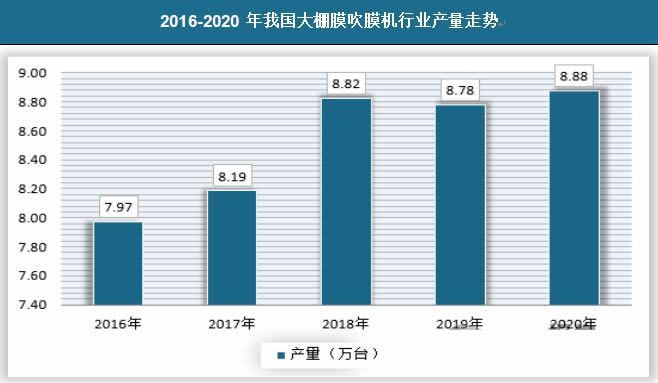
According to recent industry research reports on China’s film blowing machine sector, the market maintained a leading global position through 2021-2023. By the end of 2023, the market volume reached approximately 3 million units, driven by rising domestic and international demand.
While China is a manufacturing powerhouse, the export market share highlights a significant opportunity for growth. In 2021, the U.S. and Japan held 40% and 20% of the export market, respectively, while China accounted for 5%. This gap underscores the necessity for domestic enterprises to pivot from high-volume production to high-end R&D. To capture a larger share of the international high-end market, Chinese manufacturers are now prioritizing “Innovation-Driven Development” as their core foundation.
Historically, developed economies in Europe and North America have led the high-end blow molding equipment sector. However, the Chinese film blowing machine industry is undergoing a rapid transformation. By acknowledging the technological gap, domestic players are investing heavily in subjective R&D and precision engineering.
The industry is no longer just following trends; it is setting them. Through persistent technological accumulation, Chinese film blowing machines are evolving from “cost-effective” to “high-performance,” positioning themselves as formidable competitors in the global landscape.
The surge in the modern food industry has propelled flexible plastic packaging to the forefront. As the primary equipment for this sector, the performance of the film blowing machine directly determines the quality of the final product.
Modern high-performance film blowing machines offer:
Superior Market Adaptability: Capable of handling diverse raw materials.
Increased Production Efficiency: Reducing energy consumption while maximizing output.
Enhanced Commercial Value: Producing high-grade films that improve the aesthetic and protective qualities of commodity packaging.
Current market trends show a significant shift in the packaging landscape. While paper and plastic remain the two dominant materials, increasingly stringent environmental and energy-saving regulations in the paper industry have led to rising costs.
In contrast, the plastic film blowing industry has adapted by introducing eco-friendly and energy-efficient technologies. This cost-effectiveness, combined with the versatility of plastic film, has stimulated further demand for advanced film blowing machinery.
Innovation is pushing the boundaries of what blown film can achieve. New manufacturing processes now allow for:
Preservation Technology: Specialized films designed to extend the shelf life of fruits and vegetables.
Diverse Product Lines: Manufacturers have accelerated the development of specialized equipment, including:
PE Foam Film Blowing Machines
Multi-layer Composite Film Lines (for superior barrier properties)
Heat Shrink Film Blowing Machines
Color Strip & Sheet Film Equipment
The future of China’s film blowing machine industry lies in intelligent upgrades and high-end positioning. As science and technology continue to deepen, these machines will play a pivotal role in driving the plastics and packaging industry toward a more efficient, sustainable, and high-tech future.
This is the last one.
 English